Lucky Ducky Review: The First Ten Minutes, Hour, and Week
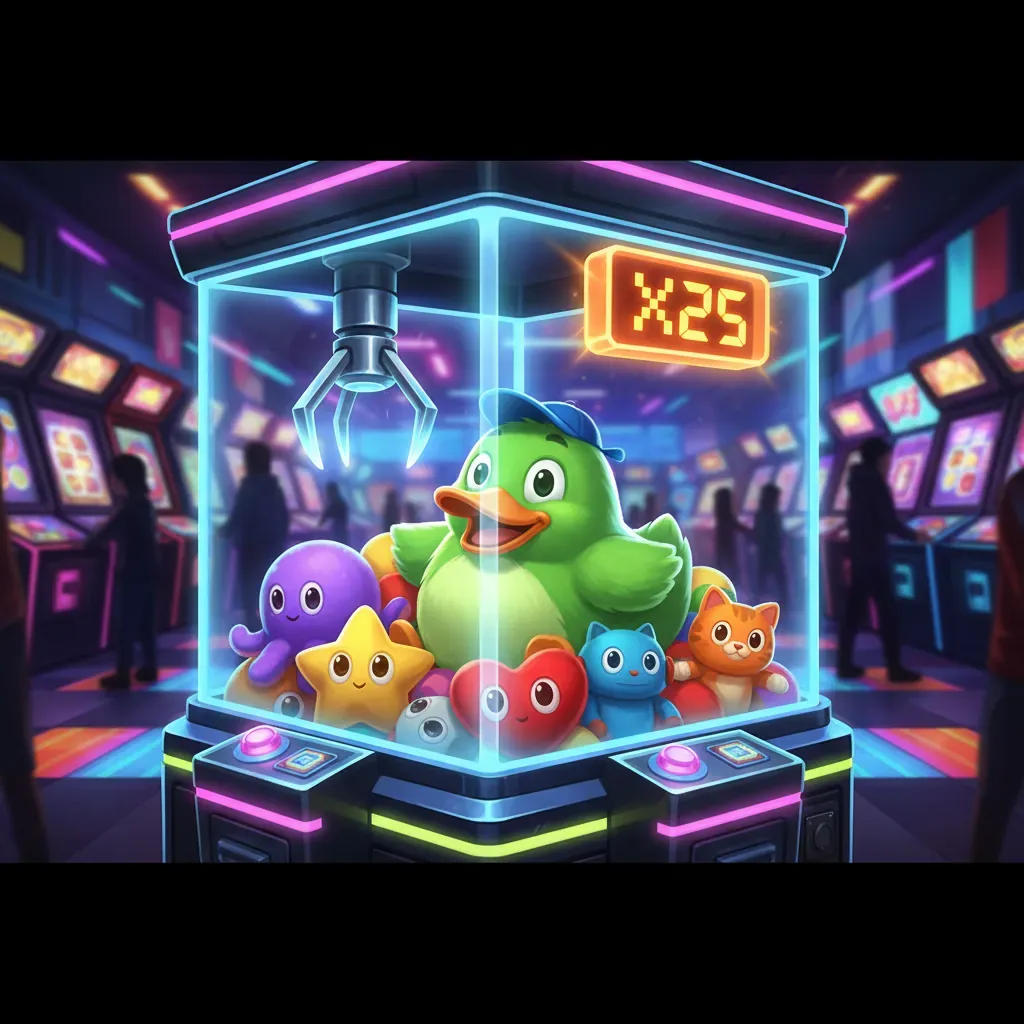
£0.12 is the minimum bet, and within ten minutes you'll understand why that figure matters more than the headline 1,000,000× multiplier. Lucky Ducky is a crash game dressed as a Korean street-arcade claw machine, built by INOUT Gaming with provably fair technology and four difficulty tiers that fundamentally alter the mathematics of each session.
This review walks through what happens in your first ten minutes, your first hour, and your first week of play — the decisions that matter, the volatility you'll actually encounter, and whether the arcade aesthetic holds up when you're chasing a cashout on your fifth consecutive losing round.
Verdict: Arcade Nostalgia Meets Brutal Volatility Choices
Lucky Ducky succeeds as a crash game because it makes volatility selection transparent and consequential. Easy mode (200× max, nine spins) plays like a low-variance slot; Hardcore mode (1,000,000× max, three spins) is a lottery ticket with claw-machine choreography. The mechanical crane, plush duck toys, and Korean neon posters deliver stronger thematic cohesion than most graph-based crash games, and the provably fair system uses SHA256 hashing with server and client seeds you can verify through the shield icon in settings.
It suits players who want granular control over risk profile and appreciate transparent math. It does not suit anyone expecting frequent bonus triggers — three matching purple hearts are required, and the feature is sparse even in Easy mode — or anyone who dislikes the stop-start rhythm of manual cashout decisions after every toy extraction.
For UK players, the £0.12 minimum works within the UKGC's £5 stake cap (or £2 for those aged 18–24), and the game is accessible on UKGC-licensed sites with your operator's licence number in the footer. Check the UKGC public register to confirm legitimacy, and if you need a break, GAMSTOP blocks every licensed site for six months to five years with one registration.
Scoring Breakdown: Mathematics, Tempo, Bonus Weight, Mobile, Aesthetic, Bankroll Fit
| Criterion | Score | Explanation |
|---|---|---|
| Mathematics | 8/10 | Provably fair with SHA256; four difficulty modes offer genuine RTP spread. Max win £100,000 at £100 stake, but Hardcore mode's three-spin limit makes the top multiplier a statistical outlier. |
| Tempo | 6/10 | Deliberate and slow. Each toy extraction takes 3–4 seconds; manual cashout after every grab creates a stop-start rhythm. Autoplay (10–200 spins, 1–30 cashout steps) helps, but the game resists quick sessions. |
| Bonus Features | 5/10 | Three matching purple hearts trigger free games (typically seven), but frequency is low. No cascading wins, no progressive jackpot, no buy-in discount — the £ cost to buy bonus scales with difficulty. |
| Mobile Version | 7/10 | Responsive layout; 44×44px close button on demo modal, large touch targets for cashout and play. Korean posters and toy details lose clarity on small screens, but core controls remain usable. |
| Visual Design | 9/10 | Strongest aesthetic in the crash category. Korean street-arcade atmosphere, realistic claw physics, colour-coded difficulty modes, and celebratory overlays (Mega Win badge, duck mascot thumbs-up) maintain immersion. |
| Small Bankroll | 7/10 | £0.12 minimum and Easy mode's 200× cap allow extended sessions on £10–£20. Medium and Hard modes demand larger buffers; Hardcore is unsuitable for cautious play. |
A Real Session: First Ten Minutes, First Hour, First Week
First ten minutes: You load the demo, select Easy mode, and press the emerald-green play button. The crane descends, grabs a plush duck, lifts it through the glass window, and drops it in the tray. Your multiplier updates to 1.05×. You cashout. The cycle repeats. By minute eight, you've seen 12 rounds, cashed out seven times, and watched five rounds end before you clicked the golden cashout button. The pattern is clear: Easy mode delivers frequent small wins, but you're deciding after every extraction whether to secure or continue.
First hour: You switch to Medium mode (1,400× max, seven spins, two lightning bolts). The variance increases immediately. Three rounds end on the second toy extraction; one reaches 48× before you cashout; another triggers the purple heart bonus and awards seven free games. During the bonus, the cabinet transforms — white and light-blue glowing dots line the edges, yellow-orange lanterns appear, and a «TOTAL WIN» display accumulates your session total in bright green. You finish the hour up 14× your starting stake, but six of the last eight rounds ended below 2×.
First week: You've tested all four difficulties with real money at a UKGC-licensed site (£0.50 per spin, well within the £5 cap). Easy mode grinds slowly but rarely punishes. Medium mode swings ±30% over 100-spin samples. Hard mode (24,000× max, five spins, amber-orange, small skull icon) delivered one 180× win and twelve consecutive losses under 5×. Hardcore mode ate £15 in nine rounds without breaking 12×, then hit 340× on the tenth. The multiplier ticker at the top — red values under 1.10×, white 1.10×–2.00×, green above 2.00× — now reads as a volatility warning rather than a win parade.
Your withdrawal request (via Faster Payments to your bank) took 36 hours, including document verification for your first cashout. The operator asked for photo ID and a bank statement, standard for UKGC compliance. Your second withdrawal cleared in four hours. You've set a £50 weekly deposit limit in your account settings, and the site's affordability check hasn't triggered because you're below the £150 monthly threshold.
Strengths and Weaknesses in Practice
- Transparent volatility control: four difficulty modes with explicit max multipliers, spin counts, and lightning-bolt risk indicators let you match the game to your session goal and bankroll size.
- Provably fair verification: SHA256 hashing with accessible server seed, client seed, and round-result formula means you can independently verify fairness through the settings panel.
- Cohesive theme: the claw-machine choreography, Korean neon posters, and plush-toy aesthetic deliver stronger immersion than abstract graph-climbs in typical crash games.
- Accessible minimum: £0.12 stakes allow meaningful trial sessions and fit comfortably within UKGC stake caps for all age groups.
- Autoplay granularity: configure 10–200 autospins with 1–30 cashout steps and stop conditions, reducing the manual load in longer sessions.
- Sparse bonus frequency: three matching purple hearts required, and even in Easy mode you may play 200 spins without triggering the free-games feature.
- Slow tempo: 3–4 seconds per toy extraction plus mandatory cashout decisions after every grab make this one of the slowest crash games per hour; impatient players will find the rhythm frustrating.
- Hardcore mode is a statistical trap: 1,000,000× sounds enormous, but three spins and very high volatility mean the mode functions as a lottery with terrible expected return over any realistic sample size.
- Mobile screen clutter: Korean Hangul posters and toy details lose definition on screens under six inches; the atmosphere suffers on compact devices.
- No bonus discount: buying the feature costs your current bet multiplied by the difficulty tier's hidden factor, with no published discount or frequency guarantee.
Alternatives and When to Choose Them
If Lucky Ducky's tempo feels too slow, graph-based crash games from established providers offer faster rounds (10–15 seconds start to finish) and simpler cashout logic: one decision per round rather than after every multiplier increment. The tradeoff is thematic depth — most graph games are visually minimal.
If you want more frequent bonus triggers, consider Plinko-style games or cluster-pays slots with cascading mechanics. These deliver small-feature hits every 20–40 spins on average, whereas Lucky Ducky's three-heart requirement pushes the interval past 100 spins in Medium and Hard modes.
If you prefer session-long narratives over round-by-round decisions, choose slots with hold-and-respin or collection mechanics. These games build towards a climax over 50–150 spins, while Lucky Ducky resets emotional stakes every 10–20 seconds.
If bankroll preservation is the priority and you're operating near the £5 or £2 UKGC stake caps, seek low-variance slots (95–97% RTP, low hit frequency variance) or Easy-mode crash games with tighter max-multiplier ceilings. Lucky Ducky's Easy mode fits this category, but its 200× cap still allows painful losing streaks.
Player Sentiment: What the Community Reports
The following observations come from player discussion forums, streamer commentary, and operator review sections. They reflect subjective experience, not verified data.
- «The claw-machine gimmick isn't a gimmick — it actually changes how you think about cashing out. Watching the crane grab a toy feels different from watching a number tick up.» Multiple players noted that the physical metaphor reduced impulsive late-cashout decisions compared to graph-based games.
- «Hardcore mode is a bankroll killer. I hit 340× once in 30 rounds and it didn't cover the losses. Stick to Medium unless you're gambling for content.» Consensus across higher-stakes players: Hardcore is for entertainment or very large bankrolls, not grinding.
- «The bonus is rarer than the paytable suggests. I tracked 400 Easy-mode spins and got the free-games feature twice. Budget accordingly.» Several players reported tracking data showing longer intervals between heart triggers than expected from promotional materials.
- «Mobile is fine for Easy mode, but Hard and Hardcore rounds on a phone feel claustrophobic. The toy pile and posters blur together.» Design fidelity drops noticeably on screens under 5.5 inches, per community feedback.
- «Provably fair is legitimately accessible. I checked a dozen rounds through the settings panel — server seed hash matched every time. It's not theatre.» Technically literate players confirmed that the verification tools function as documented.
FAQ
What stake should I use for my first Lucky Ducky session on a £20 bankroll?
Start at £0.20–£0.30 per spin in Easy mode. This gives you 65–100 rounds before depletion, enough to see the game's rhythm and encounter at least one bonus-feature opportunity (though frequency is low). Set a stop-loss at £10 and a win target of £28–£30 (40–50% gain). If you hit the target, cashout and wait for the operator's KYC process (24–48 hours for your first withdrawal). If you lose £10, stop. Do not chase on your first session — you need more data on how the variance affects your decision-making.
Is Lucky Ducky legal to play with real money in the UK?
Yes, when accessed through a UKGC-licensed operator. Check that the site displays its licence number in the footer and appears in the UK Gambling Commission's public register. Unlicensed sites are illegal to market here and carry zero consumer protection. You must be 18 or older, and stake caps apply: £5 per spin for most players, £2 per spin if you're aged 18–24. Credit cards have been banned for gambling since 2020; use debit cards, PayPal, Apple Pay, Open Banking, or paysafecard.
How does Lucky Ducky's provably fair system actually work?
Each round result is generated from a server seed (kept secret until after the round), a client seed (you can set this yourself), and the first three bets placed in that round. After the round ends, the game reveals the server seed and publishes the SHA256 hash of the next server seed. You can verify that the revealed seed's hash matches the pre-published hash, proving the outcome was determined before the round started. Access verification through the shield icon in the side settings panel; you'll see the current client seed, the server seed for the completed round, and the hash for the upcoming round. If the maths checks out, the round was fair. If it doesn't, the result was tampered with.
Why do I keep losing in Medium and Hard modes when Easy mode feels stable?
Because the game's volatility scales exponentially across difficulty tiers, not linearly. Easy mode has nine spins and a 200× cap, producing frequent small wins and rare catastrophic streaks. Medium mode drops to seven spins and raises the cap to 1,400×, which means longer losing runs are mathematically required to balance the higher max multiplier. Hard mode (five spins, 24,000×) and Hardcore (three spins, 1,000,000×) are designed to deliver extreme variance — you will experience 10–20 round losing streaks regularly. Your bankroll must be sized for the mode's volatility, not just the per-spin stake. A £20 bankroll is borderline too small for Medium mode at £0.50 per spin and wholly insufficient for Hard or Hardcore.
Can I trigger the purple heart bonus more often by increasing my stake or changing difficulty?
No reliable evidence suggests stake size influences bonus frequency, and difficulty mode does not publish different trigger rates. Player tracking data indicates the three-heart feature appears roughly once per 150–250 spins in Easy mode and possibly less often in higher difficulties, but these are community observations, not official disclosures. The game does allow you to buy the bonus outright via the golden «BUY BONUS» button on the control panel; the cost is your current bet multiplied by an unpublished factor that scales with difficulty. Buying the feature does not guarantee a profitable outcome — you're paying for the free-games round, not a minimum return. Budget the purchase as a sunk cost and evaluate the result independently.